

Knife and everyday-carry brands
Knife and EDC brand ad shots: sell the steel, not the threat
Knife brands sit on the thinnest line in ecommerce creative. A chef’s knife, a camping folder, an EDC multitool are legal products sold to millions of adults. The same product photographed wrong, a blade pointed at camera, a tactical grip in a fist, becomes a weapon ad, and weapons are a restricted or banned category almost everywhere that matters.
Build a blade still from your product photo. You see the plan and the price before anything is generated.
This is a shot map for a knife or everyday-carry brand: how to photograph edge, steel and craftsmanship so the product reads as the tool it is, where the platform lines actually sit, and which contexts turn a legal product into a rejected ad. Blurbly builds the product stills and workshop lifestyle frames. It will not make the blade look like a threat, and your brief should not either.
Blurbly editorial · · 6 min read
The same object, two different ads
Every knife photo carries a genre decision inside it. Blade flat on a cutting board beside cut vegetables is a kitchen tool. The same blade gripped point-forward is a weapon. A folder next to keys and a wallet on a desk is everyday carry. The same folder on tactical webbing is combat gear. The product did not change. The story did, and the review systems read the story.
This is the entire discipline of the category: you are always one prop or one grip away from the banned version of your own product. Write the context into the brief, the cutting board, the workspace, the pocket dump, and the frame defends itself.
Where the platform lines sit
Meta bans ads for weapons, ammunition and explosives, and knives land inside that policy unless the context clearly reads as kitchen or tool use. Kitchen knives and cutlery are the clearest allowed lane. TikTok’s dangerous products policy covers blades used as weapons, and hunting or tactical styling tips a product into it.
Marketplaces write their own versions: Amazon allows most kitchen and utility knives but restricts automatic and disguised blades, and listing images that show combat context get suppressed. The working rule across all of them: sell the craft and the use case a buyer actually has, food, camp, workbench, pocket, and the creative stays legal. The knife ad policy notes keep the platform text in one place.
Steel is photogenic, use it
A blade is one of the most beautiful objects a product photographer gets to shoot: a polished bevel, a hamon line, brushed flats, an edge that picks up a stripe of light. The hero frame is a macro of that edge with the maker’s mark visible, because steel finish is the quality argument a buyer can see without touching the product.
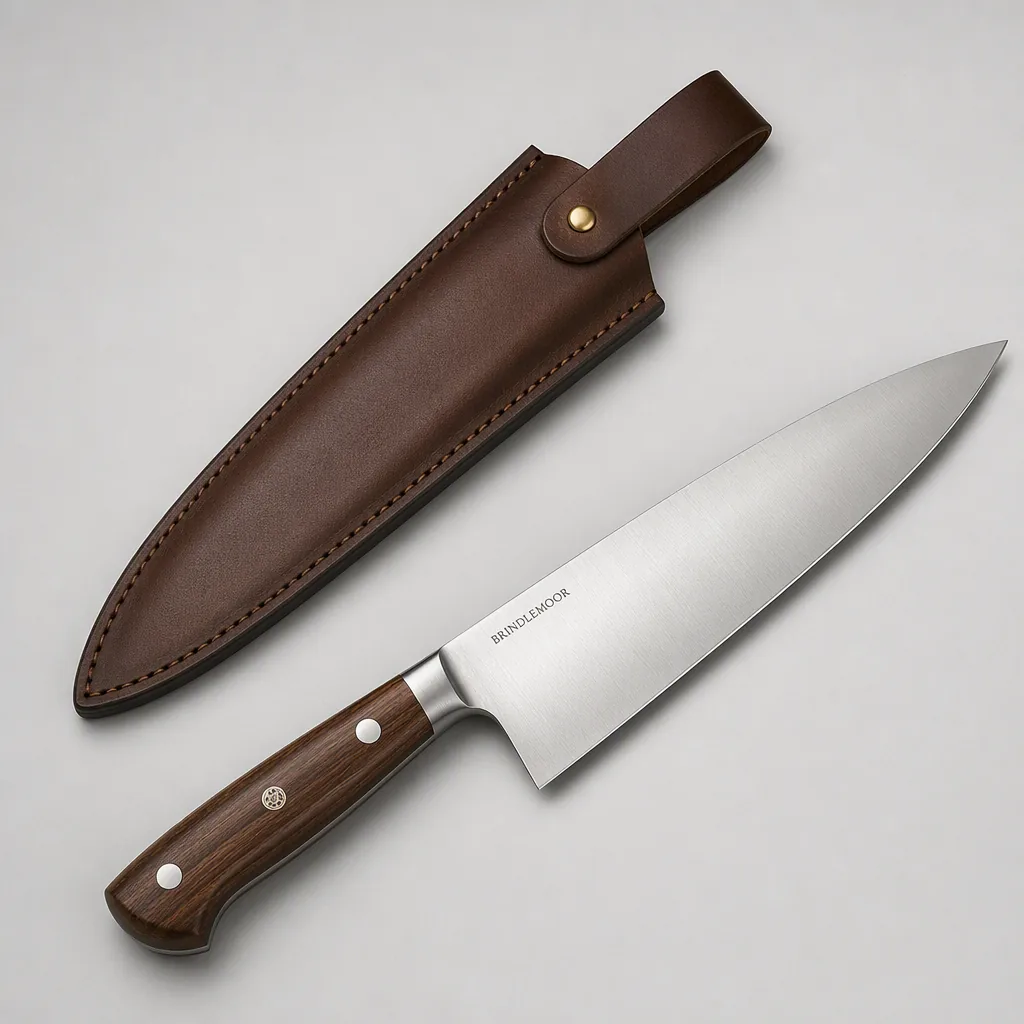
Pair the macro with the honest packshot: knife open beside its box on walnut or grey, handle texture visible, brand mark readable. A folder halfway open on the pocket clip shows the carry mechanic better than any copy. Check the logo etch in every generated frame, since small branding redraws like all small type.
Context props that keep you legal
Kitchen lane: the blade flat on the board beside a halved tomato or herbs, edge away from camera, a hand on the handle in a cooking grip. Camp lane: the folder beside a mug and a map on a log, unopened or open on wood shavings. Workbench lane: the multitool beside screws and a torn box, the utility story. Desk lane: the EDC flat lay with keys, wallet and watch, the carry-what-you-use story.
Props to leave out: gloves with knuckle padding, molle webbing, balaclavas, range gear, anything black-tactical on black-tactical. You are not making a costume, you are making a product page. The knife product photos set shows the tool-context version on fictional blades.
Hands are allowed, fists are not
A hand tells scale better than any ruler, and it belongs in the frame doing the thing the tool is for: slicing, whittling, opening a package, clipping to a pocket. The grip is the tell. A pinch on a handle during a cut is kitchen. A full tactical fist on the same handle is threat. Crop the hand at the wrist, keep it adult, and keep the blade pointed at work, never at camera or toward the holder.
If you sell a self-defence-adjacent product like a tactical pen or a kubotan, the same rule applies harder: the product in a pocket-dump flat lay is a tool, the product in a striking pose is a weapon ad. Adjacent categories live in the self-defence product photos and tactical ad guide.
The enthusiast buyer reads the details
Knife buyers are among the most literate shoppers in ecommerce. They read blade steel, lock type, blade length in millimetres and carry weight in grams. Creative that respects that literacy converts; creative that hides it behind mood lighting reads as a mall kiosk. Put the steel in the frame and the specs on the page: the grind line, the lock mechanism in a macro, the knife beside a coin or a key for scale.
The mechanism shot deserves its own paragraph because it sells to the collector. A liner lock mid-engagement, an axis lock’s omega spring, a flipper tab half-deployed: those details are what a knife person screenshots and sends to a friend. Generate them as macros with the brand mark visible, and check the small engraving on the blade against the real knife, because knife people notice a redrawn logo faster than anyone.
Gifting and the collector market are your season
Knives are bought as gifts more often than sellers plan for: Father’s Day, groomsmen sets, the retirement folder with an engraved bolter. The gift frame is the knife in its presentation box, tissue or foam visible, the certificate card beside it. That image carries no threat signal at all and sells the highest-margin version of the product, the gift SKU.
The collector angle shapes the rest. Limited runs, numbered blades and variant handle scales all want their own packshots, and they want them consistent so the series reads as a set in the grid. A disciplined template, same surface, same angle, same light, is what makes a four-variant drop look like a brand instead of a flea market table.
One caution on the gift framing itself: never stage the knife being handed over, presented blade-first, or held by a young recipient. The gift is the box, the tissue and the certificate, not a person receiving a blade. That distinction keeps the warmest selling frame in the category completely safe.
A six-image set for a blade brand
One: open knife and box on walnut, the listing main. Two: the edge macro with the maker’s mark, the hero. Three: the flat lay with keys and wallet, the EDC story. Four: the blade at work on the cutting board, the use case. Five: the mechanism shot, liner lock or axis detail, the enthusiast frame. Six: the sheath, box and certificate card together, the gift shot.
All six are tool-context frames with zero threat styling. For motion, a slow reveal of the edge catching light or the knife opening on the workbench is the loop; a product photo to video pass on the approved stills keeps the context you already built.
The last check before publish is the same one the reviewer runs: could this frame sit in a hunting or combat context. If a prop, a grip or a backdrop lets someone read it that way, swap it for the work version. The product loses nothing and the ad survives.
And keep the set consistent across seasons. The same walnut board, the same grey mat, the same angle discipline from drop to drop builds a visual inventory buyers recognise in the feed before they read the name. In a category where you cannot always buy the impression, recognition is the media you own.
That is the whole system: tool context in every frame, spec honesty in every caption, and a template tight enough that a new SKU slides into the grid without a reshoot. The blade sells itself; the photography just has to stay out of the weapons bucket.