

Polished steel and fine etching
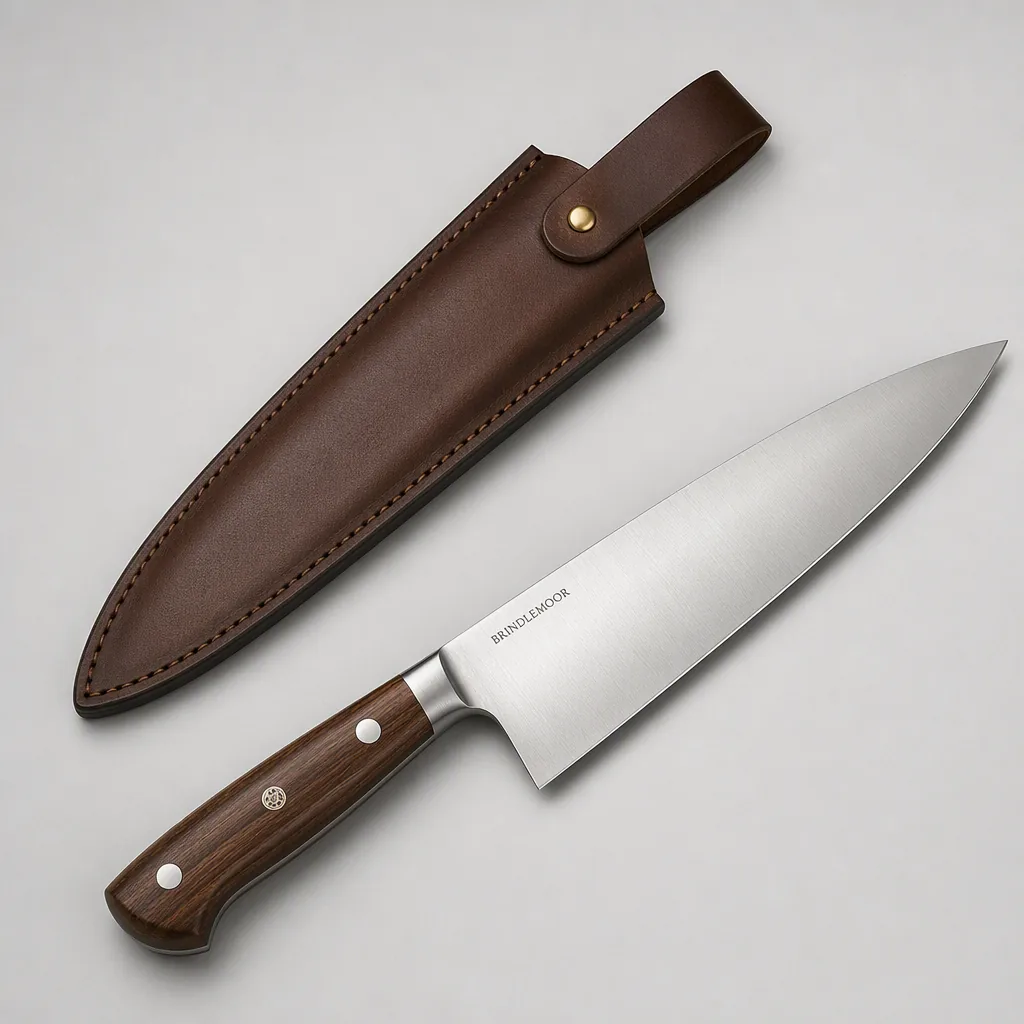
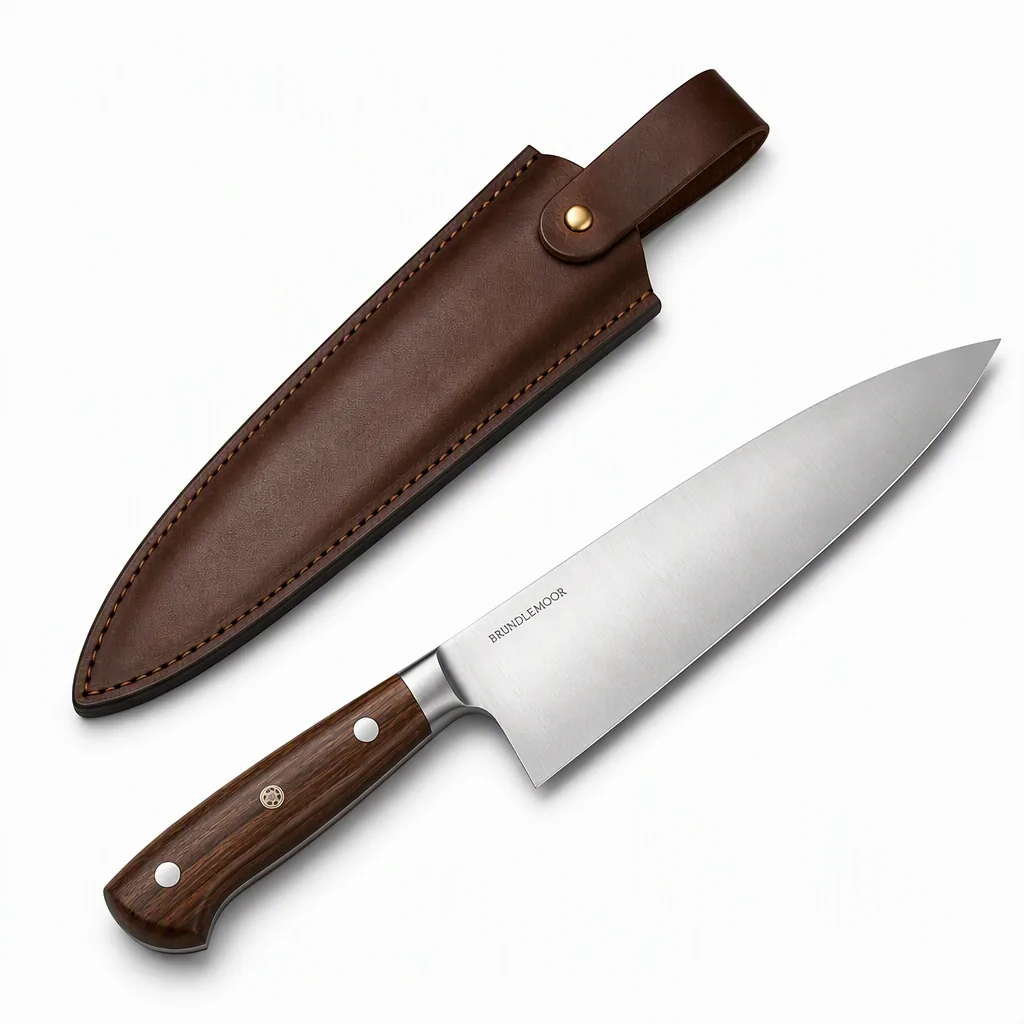
A chef knife blade is a curved mirror. Photograph it under a ceiling light and you get a hot white streak; photograph it by a window and you get the window, plus you holding the phone. Before you upload, find the angle where the blade reflects something plain, like a white wall, a sheet of card or open sky. Lay the knife flat on a matte surface, edge toward you, and shoot from directly above or slightly to one side.
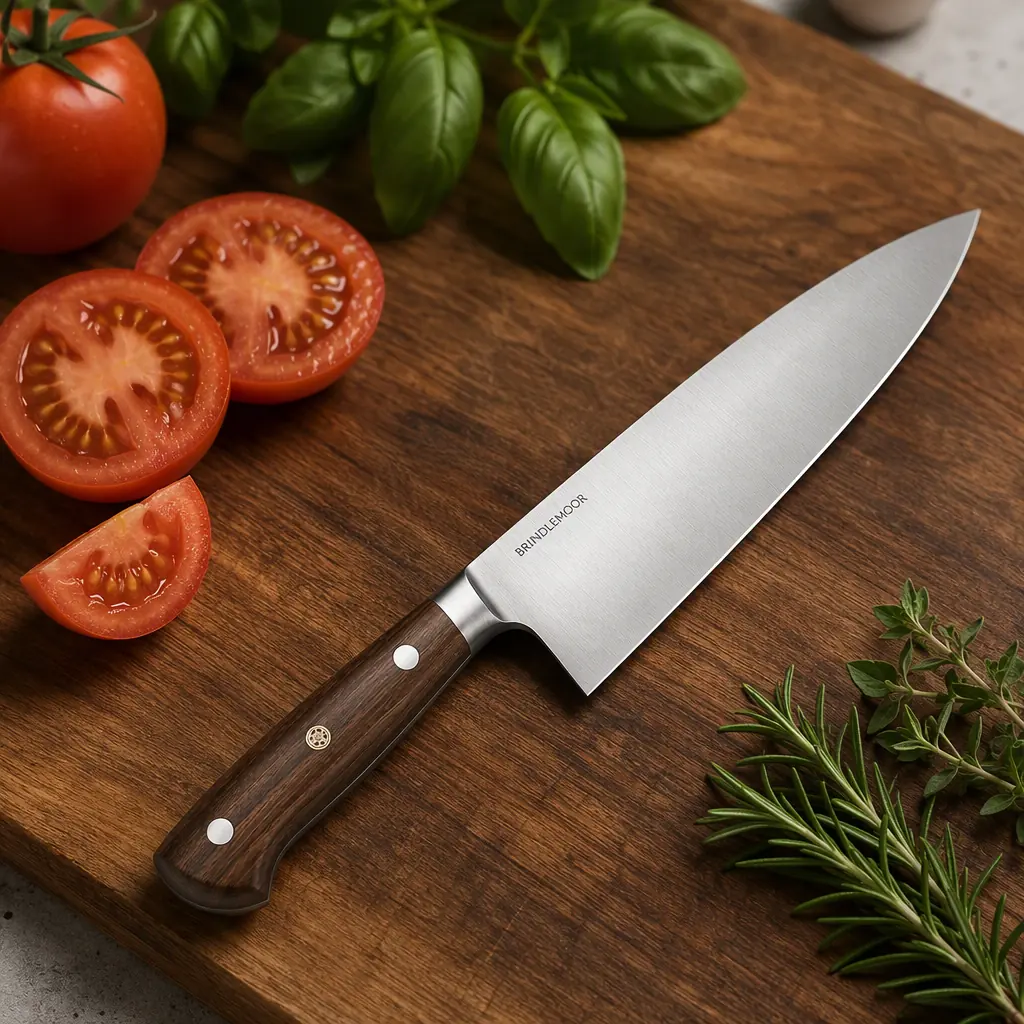
This matters more with a generator than with a camera, because the photo you upload is its only evidence of what your steel looks like. A blown-out highlight reads as a different finish. An evenly lit blade comes back evenly lit in every scene you ask for.
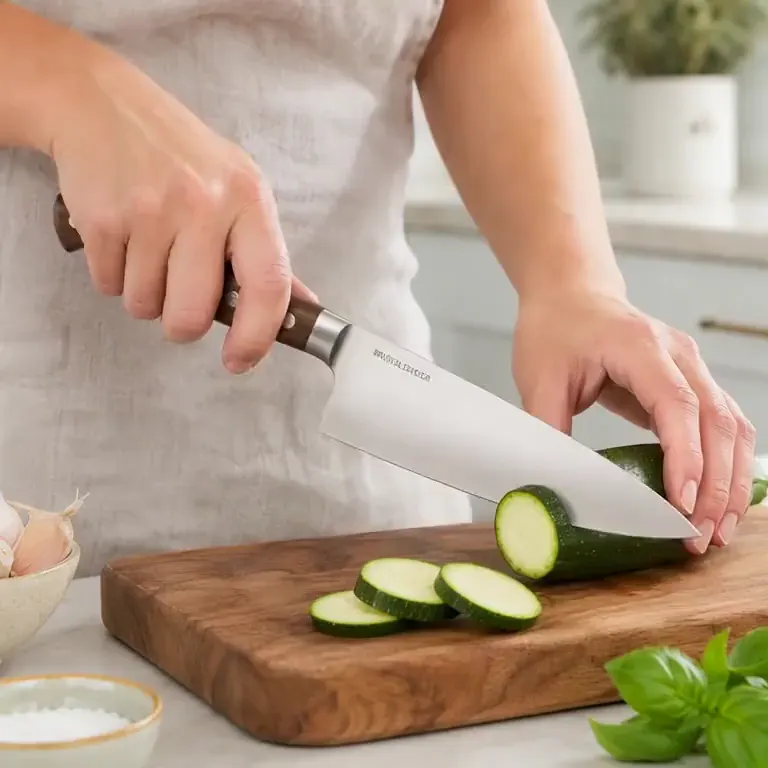
Someone weighing a premium knife against a cheap one looks at the details: the maker’s mark near the heel, the rivets, the bolster, the join between handle and blade. Etching is exactly the fine detail our test flagged as soft, so if your mark is part of what people pay for, keep a real close-up of the heel and handle in the listing.
Pattern-welded blades raise the same problem on a bigger scale. A generator may draw a convincing pattern rather than yours, and knife buyers know their patterns. We didn’t test one, so compare the result with the real blade before you use it.