

Tactical gear and defence product brands
Tactical and self-defense brand ads: equipment photography for the strictest category
This is the strictest shelf in the store. Gun accessories, personal defence sprays, alarms and tactical gear are legal products in many markets, and every major ad platform reads them through its weapons policy. Some items can advertise with restrictions, some cannot advertise at all, and the difference is rarely obvious from the product page.
Build an equipment still from your product photo. You see the plan and the price before anything is generated.
This is a shot map for a brand selling firearm accessories, gun safes and cleaning kits, or personal-defence products like pepper spray and alarms, to adults in markets where those products are legal: how to photograph equipment as equipment, which subcategories are simply off-limits for paid ads, and where the creative earns its keep anyway. Blurbly builds the product stills and gear lifestyle frames. It will not make weapons imagery, and a smart brief never asks.
Blurbly editorial · · 6 min read
Split the catalogue before you write a single brief
This category is really three. Storage and maintenance, safes, locks, cleaning kits, bore brushes, mats, is the friendliest: it is equipment for responsible ownership, and it photographs like workshop gear. Accessories, holsters, sights, grips, slings, sits in the middle: some platforms treat parts as weapons-adjacent, others allow them with restrictions. Personal defence, pepper spray, stun devices, alarms, splits by product: alarms are widely sellable, sprays are restricted in many markets and banned as ads in most.
Do not let one product’s rules poison the whole catalogue’s creative. The safe-cleaning side can run relatively normal ecommerce creative. The spray side is a no-paid-social product almost everywhere, and its creative belongs on your own store, email and retail packaging. Meta’s weapons policy and TikTok’s dangerous-products policy are the two texts to read first.
Equipment photography is your only genre
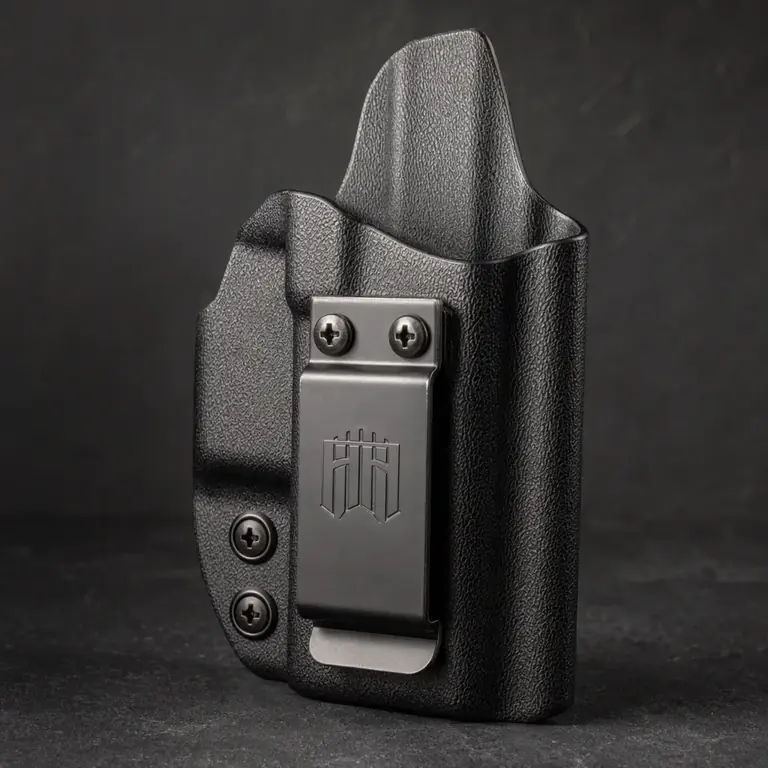
The frame vocabulary for this whole category is the workbench, the range bag and the pocket. Products laid out on a mat, in foam cutouts, beside their cases. Tools in a hand doing maintenance. A safe’s interior lit like a cabinet. None of it shows a weapon in use, a person armed, or a defensive scenario, because each of those converts an equipment photo into a threat photo.
This restraint is not just compliance, it is how the enthusiast buyer actually shops. They are comparing rail compatibility, retention clicks, foam density and finish. The flat lay and the macro answer those questions better than any action shot. The gun accessories product photos and self-defence product photos sets show this equipment-first approach on fictional products.
The flat lay is the category’s native ad format
Everyday-carry culture already invented this category’s best ad format: the pocket dump. Alarm, spray, flashlight and multitool arranged top-down on a mat or desk reads as preparedness, not aggression. A holster beside a belt and keys reads as equipment. The same items on a person in a stance read as combat.
For accessories, the compatibility shot is the money frame: the part beside the thing it fits, clearly labelled, on a clean surface. Buyers in this category are allergic to vague fitment, so show the mount interface, the screw set, the adapter in the box. Precision is the ad.
Copy: features and legality, never scenarios
The safe vocabulary: capacity, materials, retention, range, rating, warranty, what is in the box, which models it fits, and compliance statements like ships where legal. The banned vocabulary: threats, intruders, stopping power aimed at a person, and any frame or sentence that stages a crime or a confrontation. Selling the scenario is what weapons policies exist to catch.
Pepper spray copy is the trap example. “Compact, keyring, quick-safety cap” is a product description. “Stops an attacker” is a use claim and a scenario in one clause. The first survives on marketplaces and your own site. The second gets flagged everywhere. For motion, keep it to mechanism and kit: the safety cap, the spray pattern on a test target only if your market’s rules allow it, otherwise the product photo to video loop of the flat lay.
Where each subcategory can actually spend
Storage and maintenance can run careful paid creative in markets where firearm accessories are legal and the platform allows it; expect review friction and keep every frame equipment-led. Firearm parts and accessories vary by platform and item; many sellers treat paid social as unreliable and invest in search, forums, YouTube reviews and retailer listings instead. Pepper spray and stun devices are banned from standard Meta and TikTok ads; their creative lives on the store, email, and retail packaging.
Personal alarms are the odd one out: a small non-weapon safety device that most channels treat closer to a gadget. If your catalogue has one, it is the SKU that can carry the brand’s paid presence while the restricted SKUs sell on reputation. The gun accessories ad policy notes and self-defence ad policy notes keep the sourced rules side by side.
The buyer in this category is the most spec-literate on earth
Tactical and defence shoppers buy on measurements the way knife buyers buy on steel: lumens and candela for lights, retention type for holsters, cubic inches and denier for bags, spray pattern and range for defence products. Creative that shows the interface, the mount, the clip, the seal, outperforms mood imagery every time, because the buyer is checking compatibility in the photo.
Give them the verification shots. The holster’s retention screw, the sight’s mounting footprint beside the rail standard it fits, the safe’s anchor holes, the alarm’s pin pull in a macro. Each detail frame answers the objection that kills the sale, and none of them trips a policy, because none of them is a threat.
Responsibility is a selling point, not a disclaimer
The brands that survive this category lean hard into responsibility framing: safes and locks in front of the product, training gear in a class, storage before carry. That is partly ethics, partly strategy. A brand whose imagery says “keep it locked, train with it, store it right” reads as the legitimate end of the market to every reviewer, processor and platform that looks.
Put the safe and the lock in your own product grid, even if you only sell one. A catalogue that leads with storage reads differently to a payment underwriter than a catalogue that leads with weapon accessories, and the underwriter sees the same pictures your customer does. The tactical gear category notes cover where the platform lines sit; the brand decision underneath is yours.
This is also the argument for keeping every SKU’s imagery in the same register. A single aggressive frame in an otherwise clean library gives a reviewer a reason to look harder at all of them. Consistency across the catalogue is the quiet moat of this category, and it is built one disciplined frame at a time.
A six-image set for a gear brand
One: the product and its case on a mat, the listing main. Two: the mechanism macro, the retention click or the safety cap, the engineering story. Three: the EDC flat lay, the preparedness frame. Four: the compatibility shot beside what it fits, the fitment proof. Five: the interior-of-safe or in-bag storage shot, the responsibility frame. Six: the full kit contents arranged, the value shot.
Every frame is equipment in a workspace or carry context. No one armed, no confrontation, no tactical theatre. That discipline is what lets the catalogue keep selling on every surface that will still have it.
If the creative library feels plain after all these rules, that is correct. In the strictest category on the shelf, plain is what scales. The brands that look like equipment companies get to keep advertising; the ones that look like action movies get to keep appealing rejections.
Start with the six frames, keep the spec sheet honest, and let the forums and the reviewers carry the story. In this category the brand’s job is to look like the safest pair of hands on the shelf.