

Supplement and wellness brands
Supplement ad claims that pass review, and the shots to carry them
Supplements are the most rejected legal category on paid social, and the rejection almost never comes from the product photo. It comes from the claim wrapped around it: a body that changed, a number on a scale, a condition that went away. The image can be a perfect tub on a counter and the ad still fails because the caption promised what a capsule cannot legally promise.
Build a supplement still from your tub photo. You see the plan and the price before anything is generated.
This is a claim map first and a shot list second, for a supplement or weight-management brand selling to adults: which words and frames end the ad, what vocabulary the platforms actually let through, and how to build creative that says something true instead of something banned. Blurbly makes the product photography; writing a health claim is your line to not cross, not ours.
Blurbly editorial · · 6 min read
The rejection is in the sentence, not the pixels
Read a rejected supplement ad the way the reviewer reads it. Meta’s health and wellness policy bans inferiority language about appearance, close-ups that single out a body area such as pinched fat, disease claims, and weight-loss promises without clear time context. TikTok’s weight-management rules ban promoting a product as the sole solution and limit weight claims to adult audiences. Notice that every item on that list is a sentence or a crop decision, not a product.
That means the fix is editorial. The tub, the scoop, the texture, the counter where the routine happens can all stay. What has to go is the story that a body was wrong and the product corrected it. Write that rule on the brief before you open the generator, because a model will happily illustrate a shame narrative if you describe one.
Words that end the ad
The banned vocabulary clusters into four groups. Disease claims: treats, cures, prevents, heals, plus every named condition from diabetes to anxiety. Transformation claims: lose X pounds, melt fat, torch calories, slim down, plus every before-and-after frame. Inferiority hooks: tired of your belly, fix your body, the flaw-first opener. And mechanism claims: boosts metabolism, burns fat while you sleep, blocks carbs, which are health claims in a lab coat.
What survives is sensory and procedural: flavour, ingredients, dosage, third-party testing, how and when the product is used, who formulated it, what is not in it. “Two scoops, 24 grams of protein, no added sugar” is a fact you can substantiate. “Burns fat” is a claim you cannot. The boring sentence is the compliant one, and boring converts fine when the creative is good.
The before-and-after is dead, kill the cousin frames too
Everyone knows the classic split image is banned. The cousin frames still get submitted daily: a waist with measuring tape, a hand pinching a stomach, a scale under feet, a too-small pair of jeans held against a body. Each one is the same story told in a different crop, and reviewers reject them on the same rule.
The honest replacement is the product in the routine. The tub on the kitchen counter beside the fruit bowl. The scoop mid-pour. The sachet next to a gym bag. A person can be in frame doing something ordinary with the product, fully dressed, no body-part crop, no mirror check. The shapewear ad policy notes cover the adjacent body-image rules if your brand touches both categories.
Shot list for a supplement brand that wants to live
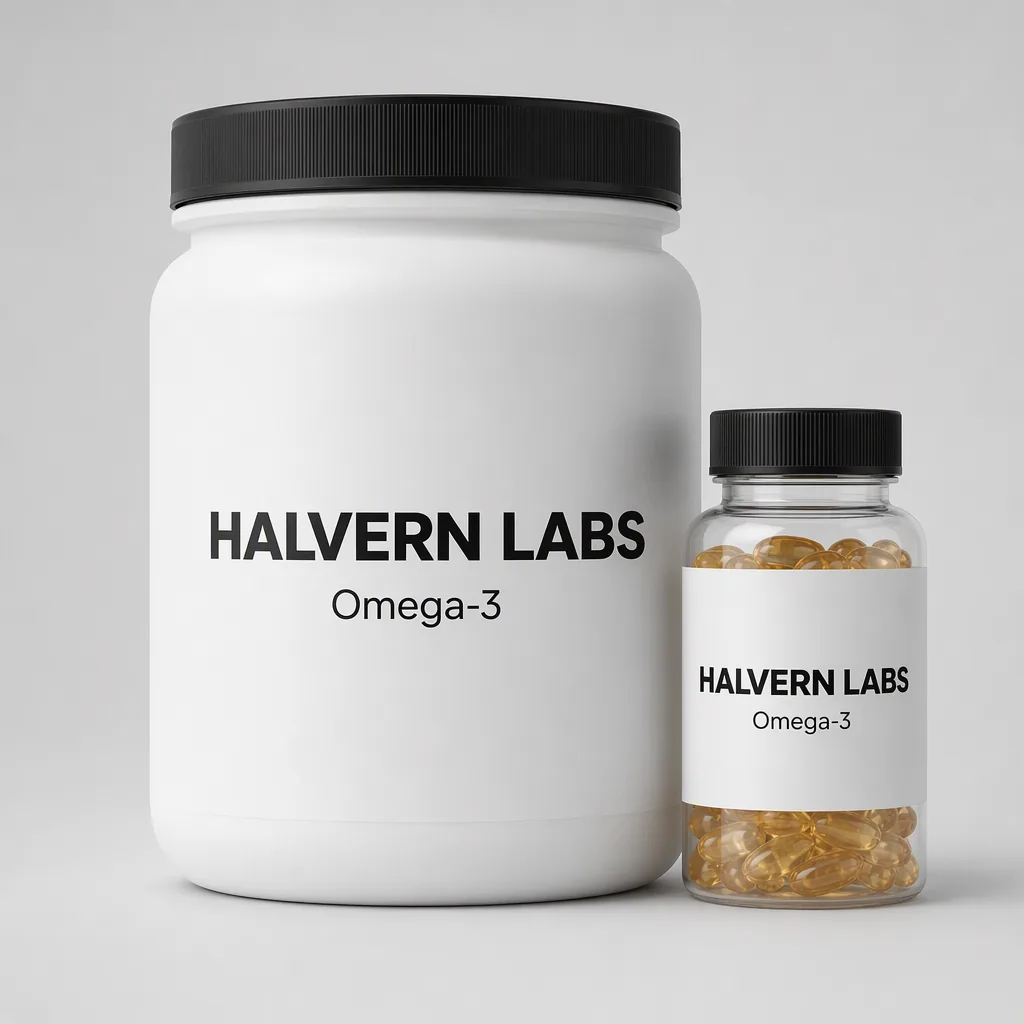
One: tub and bottle on grey, label square, the listing image. Two: the scoop mid-pour with powder texture, the hero frame. Three: the tub on the counter in morning light beside ordinary breakfast objects, the routine still. Four: the capsule macro on the brand colour, the ingredient story. Five: the sachet or single-serve beside a gym bag zip, the convenience frame. Six: the flavour line-up, the SKU poster.
Every frame is an object in a routine, no bodies cropped to a part, no transformation implied. If you want a person in the lifestyle frame, the supplement product photos set includes a product-in-hand shot that passed our own checks, and it shows where the hand can sit without the image becoming a body story.
The claims your label can actually carry
There is a legal middle register between silence and a medical claim, and it lives on your label. Structure-and-function language, “supports joint health”, “helps maintain energy”, is what most supplement regulation allows when it is true and substantiated, and it reads as professional rather than miraculous. Platforms still treat some of it cautiously, but it is a different universe from “cures arthritis”.
The discipline is substantiation. If the label says it, you should be able to point at the ingredient, the study or the regulation that lets you say it. When in doubt, sell the spec instead: milligrams, servings, third-party testing, what is not in the formula. A buyer comparing two tubs reads the numbers, not the adjectives.
The routine is the retargeting
Supplements are a repurchase business, and the creative that drives repurchase is the routine, not the promise. A morning-counter still, a travel sachet, a “running low” email with the tub on the shelf, each one reminds a customer who already decided that the product sits in their kitchen. You do not need a claim for that audience; you need a familiar frame.
This is also where the flavour and format story pays. A collagen powder that is genuinely flavourless has a boring spec sheet and a beautiful use case: it disappears into coffee. Show the scoop going into the mug. That is a true product story with no claim attached, and it is worth more than any promise the policy would have rejected anyway.
Do the same math for reviews and testimonials. A customer saying it tastes good and mixes clean is usable. A customer describing a condition that improved is a disease claim wearing a quote mark, and reviewers treat it exactly like you wrote it yourself. Curate quotes the way you write copy, not the way you feel about them.
Where each channel lets you spend it
Meta allows supplement ads with 18-plus targeting and the claim rules above, which makes it the main paid channel for the category. TikTok allows supplements for adults under its healthcare and weight-management policies, with stricter limits on anything weight-coded. Both will still reject on claims, so the ad and the landing page have to tell the same clean story.
Your own surfaces carry the richer version: the ingredient deep-dive, the lab-report download, the founder story. A short product video of the scoop pour and the routine still works on organic social and the product page. Keep the claim vocabulary identical across all of it, because a platform reviewer who finds “burns fat” on your site treats your clean ad as camouflage.
If the claim is the product, fix the product story
Some brands read this and feel like nothing is left to say. What is left is everything except the promise. The protein that mixes without a blender ball. The gummy that tastes like the fruit on the label. The third-party batch test you can download. The dosage that is one capsule, not four. Those are reasons to buy, and they are all legal to show.
The brands that scale in this category are the ones that made their packaging and their routine photogenic enough to carry the ad. That is a design problem, and it is a solvable one. The supplement ad policy notes keep the Meta and TikTok rules with sources if you want them beside the brief.
Before any frame goes live, run the checklist once: no body crop, no transformation story, no disease word, no mechanism claim, label text verified against the real tub. It takes a minute per image and it is the difference between a campaign that ages in an account and one that gets it restricted.