

CBD and hemp brands
CBD brand ad shots: creative for the one restricted category Meta will certify
CBD is the strange middle seat of ad categories. On a shelf it is a wellness product: amber bottles, gummy jars, soft sage backdrops. In an ad account it sits inside the drugs and pharmaceuticals policy, and the only way onto Meta is a third-party certification most small brands have never heard of. The creative that builds the brand has to serve both truths at once.
Build a CBD product still from your bottle photo. You see the plan and the price before anything is generated.
This is a shot map for a hemp-derived CBD label selling to adults: what to make for listings and your own site, what the certified-ad path on Meta actually requires, and why TikTok stays closed for ingestibles. Blurbly builds the product stills and lifestyle frames. It does not write health claims, and neither should your copy.
Blurbly editorial · · 6 min read
The product photographs like wellness and regulates like pharma
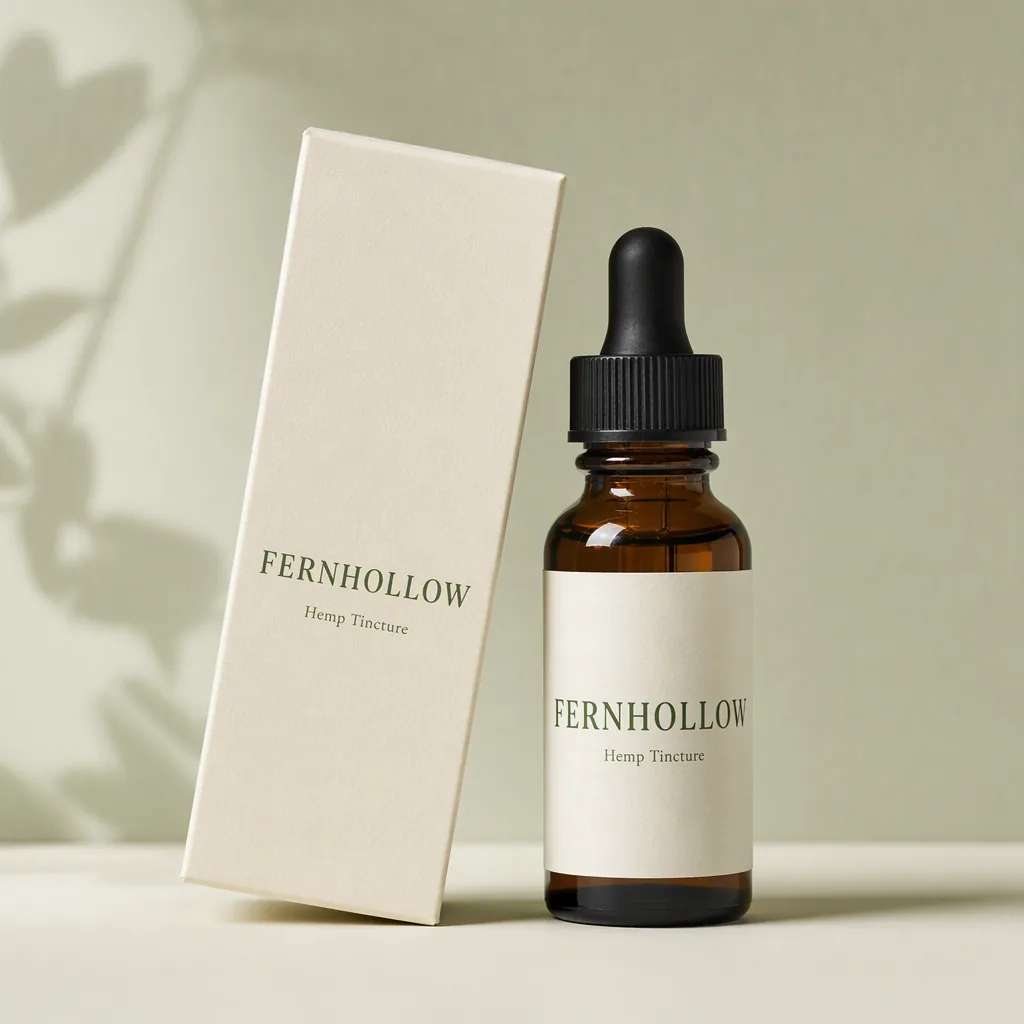
A tincture bottle is a beautiful object: amber glass, a dropper, a paper label with botanical type. Shot honestly it is indistinguishable from a supplement or a skincare oil, and that is exactly the problem. The audience sees a bedtime product. The ad platform sees a cannabinoid. Your creative has to satisfy the first group without making a promise the second group punishes.
The safe centre of gravity is the object itself: the bottle, the texture of a gummy, the ritual of the dropper. The moment the frame starts illustrating an outcome, a sleep score, a pain scale, a calmer mind, you are in health-claim territory. Keep the product the subject and let the buyer’s own reason for shopping do the rest.
Meta’s gate is LegitScript, not creative quality
Meta allows CBD ads only from advertisers certified with LegitScript, only in the United States, and only without health or medical claims or targeting under 18. THC products are not allowed at all. That certification is a paperwork gate, not a creative one: no amount of tasteful photography gets an uncertified account through review.
If you are certified, the creative rules are the normal ones with the claim clause on top. Your ad can show the bottle, the ritual and the store. It cannot say what the product does for a body. If you are not certified, do not test the reviewer’s mood. Build the same assets for your own site and email, where no ad reviewer sits between you and a legal adult customer.
TikTok is closed for ingestibles, so stop checking
TikTok’s public policy pages do not carry a clean CBD rule we could verify. Third-party summaries of the platform’s policy say ingestible CBD is not allowed for self-serve advertisers. Treat it as closed until TikTok publishes otherwise, because building creative for a channel you cannot use is how budgets die quietly.
What TikTok can still do for a CBD brand is organic content on your own account, which has its own moderation but no ad review. A product-in-hand clip, a how-it’s-made look at the gummies, the shelf being restocked. Keep it product-first there too. The product video generator turns the stills into short clips for exactly that kind of organic post.
Shot list: ritual over result
One: the amber bottle and box on linen, the listing main image. Two: the dropper held above the open bottle, mid-draw, adult hand, the ritual shot. Three: gummies beside the jar, texture visible, the edible SKU. Four: the bottle on a bedside table with a book and dim lamp, the bedtime-adjacent still that never says the word sleep. Five: the topical jar open with a finger-scoop of cream, the skincare-adjacent frame. Six: the whole line-up on the brand colour, the wholesale and email header shot.
Notice what is missing: no before-and-after, no body diagram, no leaf icon that promises a pharmacology. Hemp leaf art is the classic unforced error. It reads as THC to reviewers and as cliché to buyers. Your label already says CBD. Let it work.
The surfaces that pay for the photography
Because paid social is gated, a CBD brand’s creative earns its keep on the surfaces nobody reviews twice: the product page, the subscribe-and-save email flow, the dispensary or retailer sell sheet, and packaging. The product page is where the ritual shots live, the dropper, the bedside table, the gummy texture, because that is where an adult is deciding whether this bottle is the one.
Email is the workhorse. A CBD audience that opted in is an adult audience you own, and a monthly send wants a fresh image every time: the new flavour still, the line-up poster, the lab-report graphic with the bottle beside it. Wholesale sell sheets reuse the same set. One disciplined photo day, or one good generation session, feeds all of it for a quarter.
What to do with the hemp leaf
Every CBD brief eventually asks for the leaf, and it is almost always a mistake. A cannabis leaf on the frame reads as THC to a reviewer, as a drug cue to a marketplace scanner, and as clip art to a buyer who has seen ten thousand identical labels. The brands that look like wellness companies put a botanical on the label, not a flag.
If the product genuinely is whole-plant hemp, the honest version is the plant itself: a stem of hemp in a vase beside the bottle reads as agriculture and provenance, not as a dispensary sign. Even then, keep it off anything headed for a marketplace or a certified ad, because an automated system does not grade the difference between a leaf and a lifestyle.
Labels, dosage and the tiny type problem
CBD packaging carries more regulated type than almost any wellness product: milligrams per serving, THC threshold statements, supplement facts, batch QR. Generators redraw small type with confident wrongness. A label that reads “25mg” on the shelf can come back reading “25ing” or a plausible wrong number, and a wrong dosage on an ad is a liability, not a typo.
Shoot the real label sharp, compare every generated frame against it, and where the generated type fails, use the frame for mood crops only. The CBD product photos page runs the same test we describe here on fictional bottles and calls out exactly where the small print softened.
A faster fix for the label problem is to give the generator a reason to be faithful. Upload the sharpest straight-on label photo you own as the reference, ask for the label facing camera, and keep the busy claims panels for the detail shot where you control the text. The hero frame only needs the brand line readable; the compliance panel is a different crop with different stakes, and you can also just photograph that panel yourself.
Copy rules that keep the account alive
The image is only half the surface. The copy on the image and beside it follows the same claim rule. “For sleep”, “eases pain”, “anxiety relief” are medical claims and end certified ads as fast as uncertified ones. What remains is sensory and procedural: hemp-derived, third-party tested, per-gummy dosage, the flavour, the ritual.
If a claim matters to your buyer, let the site carry it in the form of a lab report and customer language you can substantiate, not the ad image. The CBD ad policy notes keep the Meta certification steps and the TikTok status in one place with sources.
The last copy rule is boring and saves accounts: whatever the image implies, the landing page has to agree with it. A careful ad pointing at a product page full of cure language is the same rejection one click later. Keep the whole chain in one register, bottle, ritual, spec, and the creative stops being the weak link.
One practical habit separates the brands that stay certified: keep a swipe file of your own approved work. Every ad that passed review is a template with proven geometry. When you need a new frame, vary the object and the light, not the claim structure. Consistency is not laziness here; it is the paperwork in visual form.